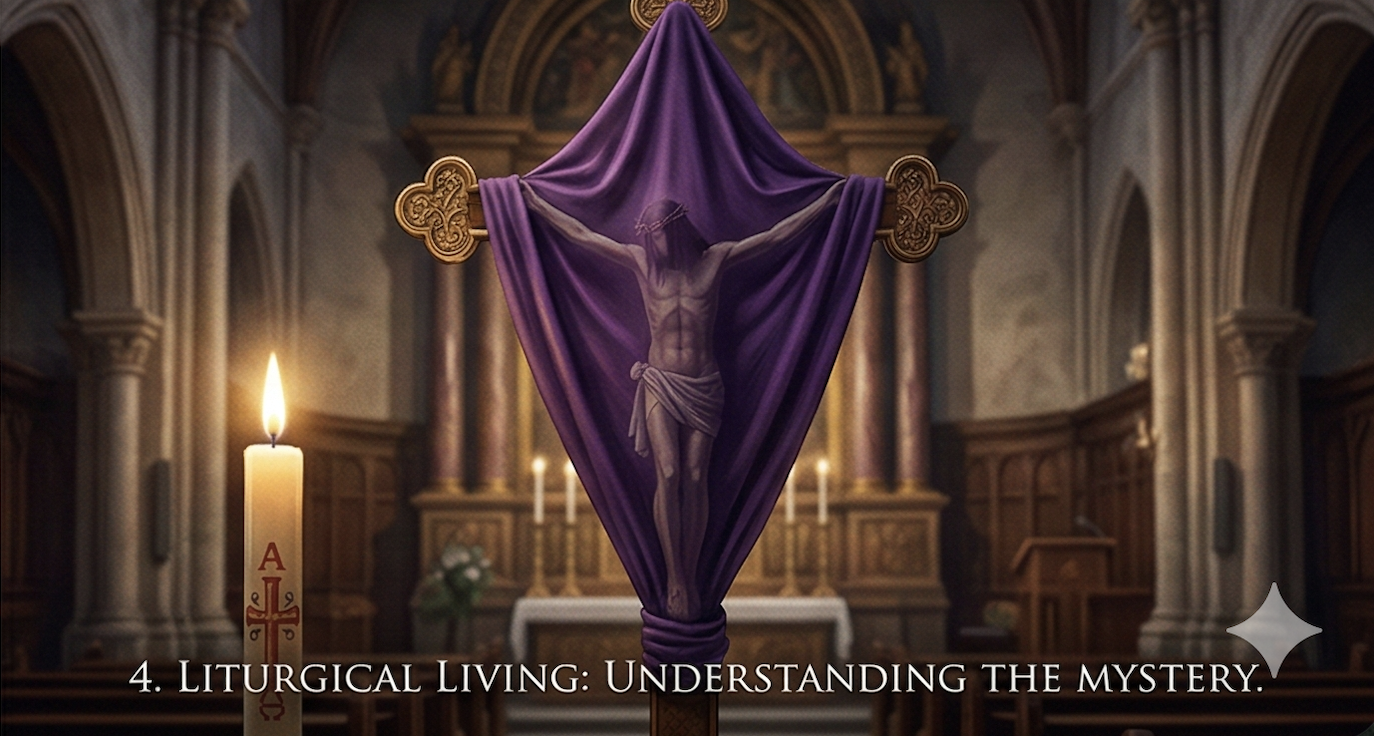
To the casual observer, the traditions of the Lenten season can seem strange, even macabre. We smudge soot on our foreheads on a Wednesday. We cover our beautiful statues and crucifixes in somber purple cloth. We bury the "Alleluia" in a symbolic casket and refuse to sing it for six weeks.
But for the Church, these aren't just "rules" or "traditions for tradition’s sake." They are a profound visual and sensory language—a "liturgical pedagogy"—designed to prepare our hearts for the staggering shock of the Resurrection.
The Veil and the Void
Perhaps the most striking tradition is the veiling of images during Passiontide (the final two weeks of Lent). Why would we hide the very images that inspire our faith?
This is what we call a "visual fast." Throughout the year, we are bombarded with images. In our churches, we are comforted by the familiar faces of the saints and the sight of the Cross. By covering them in purple, the Church creates a "void." We feel the absence. Our eyes "hunger" for the sacred. This deprivation heightens our longing. It forces us to stop relying on outward signs and start focusing on the internal reality of Christ’s presence. When the veils are finally ripped away at the Easter Vigil, the visual impact is a physical representation of the veil of the Temple being torn in two.
The Dust of Stars and the Ash of Palms
"Remember that you are dust, and to dust you shall return." These words from Ash Wednesday set the tone for the entire season. It is a memento mori—a reminder of our mortality. But there is a hidden beauty in the ash. The ashes are made from the burnt palms of the previous year’s Palm Sunday.
This is the liturgical cycle in a nutshell: Yesterday’s triumphs (the palms) become today’s repentance (the ashes). We acknowledge that everything worldly eventually turns to dust. However, in the hands of the Creator, dust is the raw material for life. God breathed into the dust of the earth to create Adam. He will breathe into the "dust" of our Lenten sacrifices to create a New Covenant.
The Triduum: The Three-Day Symphony
As we approach the end of Lent, we enter the Triduum—Maundy Thursday, Good Friday, and Holy Saturday. These are not three separate services; they are one long liturgy that spans three days.
-
Thursday: The Mandatum (The Command to Love) and the institution of the Eucharist.
-
Friday: The Adoration of the Cross—the day the world went dark.
-
Saturday: The Great Silence, followed by the first light of the Paschal Candle.
Understanding the "Why" behind these traditions transforms them from empty rituals into "thin places" where heaven and earth meet. As we dive deep into the liturgy this year, don't just watch the priest or deacon; enter the mystery yourself. Wear the purple of repentance so that you are ready to wear the white of the Resurrection.
Questions
-
The Senses: Which Lenten symbol speaks to you most deeply—the grit of the ashes, the purple veils, or the silence of the "buried" Alleluia? Why do you think that specific sense (touch, sight, or sound) resonates with your soul right now?
-
The Anticipation: As we approach the Triduum, how are you preparing your home or your "interior castle" to receive the light of the Resurrection?
-
The Prayer: "Lord, may these outward signs lead me to an inward transformation."